For adolescents and young people, being heard is important. But meaningful participation requires something more: their voices must have pathways to influence the policies, budgets, programmes and services that affect their lives.
This principle was at the heart of the Advocating for Change for Adolescents project, implemented in Sierra Leone by the Youth Partnership for Peace and Development (YPPD) with funding from the Partnership for Maternal, Newborn and Child Health (PMNCH), through the World Health Organization (WHO).
Implemented during 2023, the initiative connected Sierra Leone's adolescents and young people with the global 1.8 Billion Campaign and Global Forum for Adolescents, while building a national movement around adolescent health and well-being.
By the project's conclusion, its communications and engagement activities had reached an estimated 100,000 people nationally. More importantly, the initiative demonstrated how youth-generated evidence, digital innovation, grassroots mobilization and multi-stakeholder advocacy can work together to move adolescent priorities closer to the places where decisions are made.
Listening at Scale: More Than 32,000 Young People Share What Matters
One of the project's most ambitious components asked a straightforward but powerful question: What do young people want for their well-being?
YPPD trained mobilizers to use chatbot technology and other data-collection approaches to gather adolescents' priorities as part of the 1.8 Billion Campaign.
But implementation quickly revealed an important lesson about digital inclusion.
Many young people did not have access to Android phones or could not easily participate through the online chatbot. Rather than allowing technology to determine whose voices counted, YPPD adapted.
The team combined online engagement with paper-based and offline data collection, deploying field mobilizers while additional personnel supported data entry, verification and quality assurance. The result was significant.
The community rollout reached 32,289 adolescents and young people, with an average age of 19, across all five regions/provinces of Sierra Leone. Their perspectives contributed to the wider collection of youth demands informing the Agenda for Action for Adolescents.
The experience offered an important development lesson: digital innovation works best when it is designed around people's realities.
Technology expanded possibilities, but flexibility and human engagement helped ensure that young people facing digital barriers could still participate.
Turning Youth Perspectives Into an Agenda for Action
Collecting thousands of voices was not intended to be the endpoint.
The project sought to connect what adolescents were saying with advocacy and decision-making. YPPD and its partners therefore created spaces where young people, government officials, civil society organizations and other stakeholders could examine adolescent priorities together.
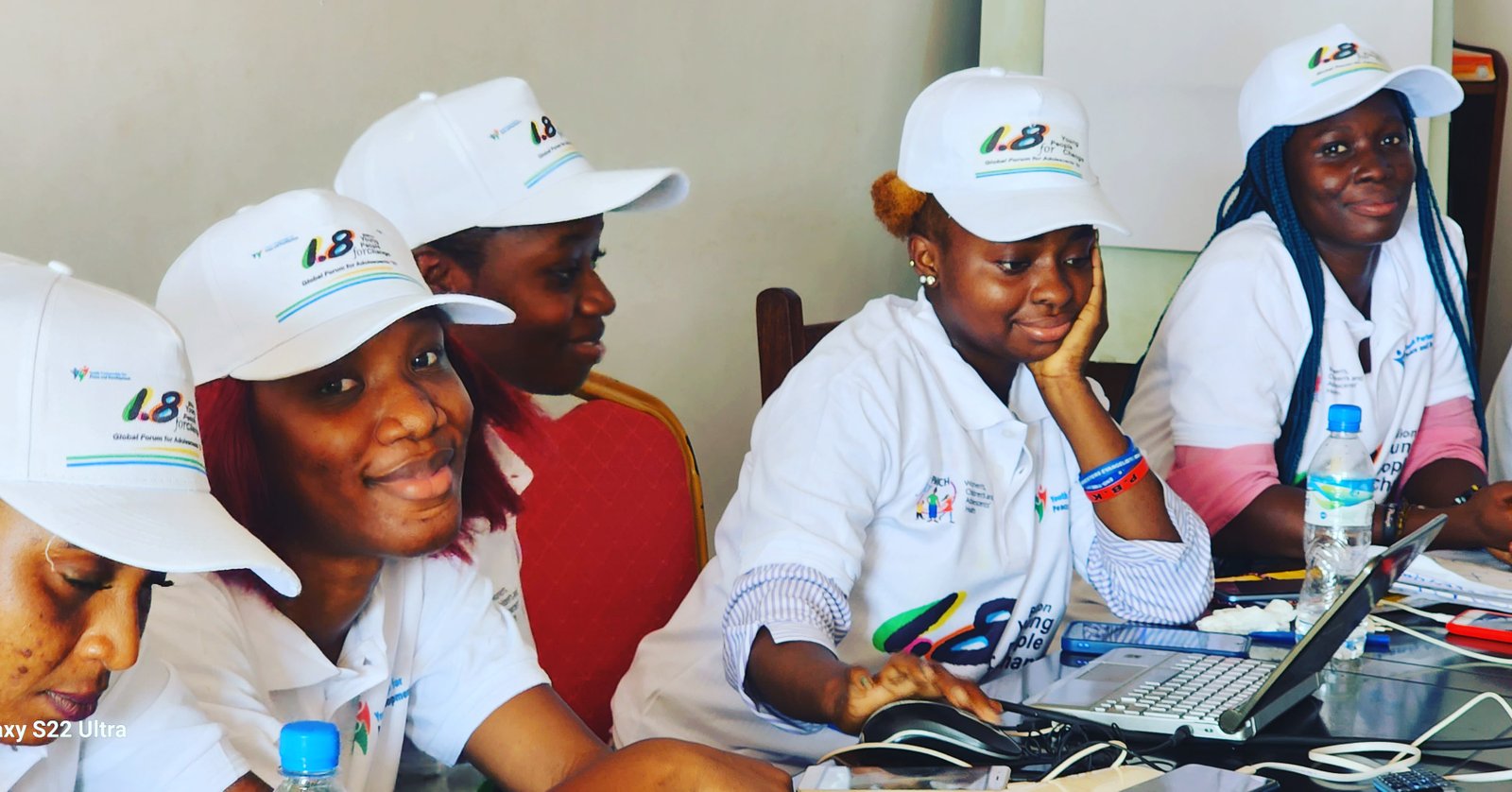
A pre-Global Forum roundtable in Freetown brought together 30 adolescents and young people to discuss their aspirations and concerns. Their priorities included education, health and employment, with particular attention to mental health, quality education and access to resources.
YPPD also convened an inclusive process involving stakeholders from multiple sectors to review and contextualize the Agenda for Action for Adolescents, examining how its priorities could better align with Sierra Leone's existing policies and where additional policy action might be required.
This helped move the initiative from listening to localization.
Rather than simply importing a global agenda into Sierra Leone, stakeholders considered how adolescent priorities could speak to the country's own policy environment, programmes and services.
Bringing Adolescents Into National Policy Conversations
Perhaps one of the project's most important impacts was creating pathways between youth advocacy and national decision-making spaces.
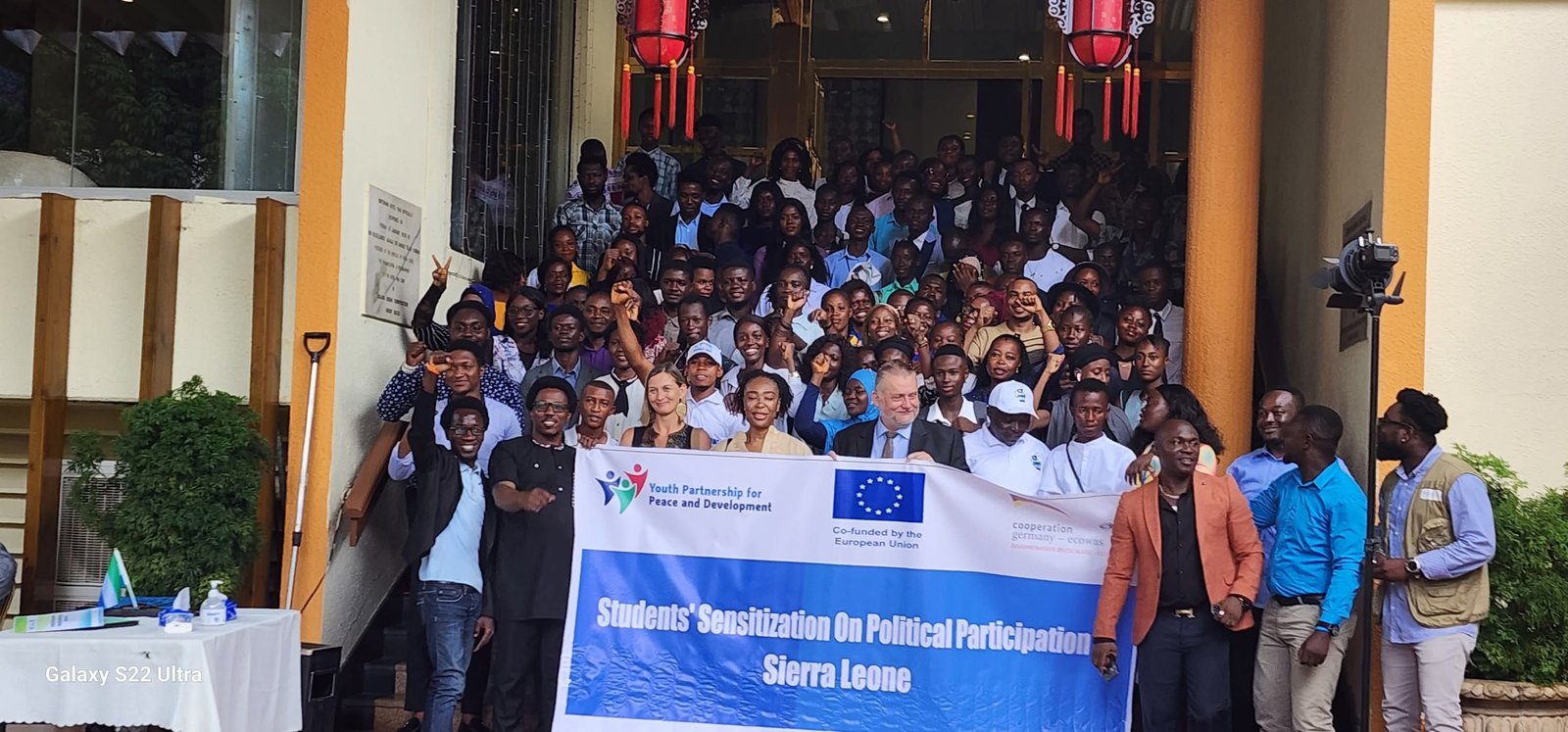
On 19 September 2023, YPPD convened a national forum involving more than 150 participants from government, civil society, youth groups, adolescents and organizations working on health and development.
The forum provided an opportunity to build momentum for the Global Forum for Adolescents and the 1.8 Billion Campaign while calling for stronger political prioritization of adolescent and youth well-being.
Policy dialogue extended beyond a single national event.
Beginning in Bo in May 2023, YPPD facilitated policy dialogue that resulted in what the project called the Bo Consensus. A policy brief was subsequently used to structure engagement with duty-bearers, and 500 copies of the policy brief and Bo Consensus were produced to support informed advocacy.
But one development stands out.
During Sierra Leone's national budget-setting and planning process, nine project mobilizers participated in budget discussions involving the Ministries responsible for Health, Education, Youth, Social Welfare, Gender and Children's Affairs.
There, young advocates were able to raise questions about investment in adolescent well-being and development.
That is an important shift.
Youth participation becomes more meaningful when young people are not only invited to youth events but can also engage in the institutional processes where public priorities and resources are debated.
Building a Coalition Around Adolescent Well-Being
YPPD did not undertake this work alone.
Partnership was central to the project's approach.
The final project brief records engagement with more than 12 partner agencies, spanning government, civil society and non-governmental organizations. Seven partners also strengthened their capacities in areas including data collection, entry and analysis for evidence-based advocacy.
Partners engaged during implementation included youth-led organizations and networks as well as health, advocacy and civil society actors. Government stakeholders included institutions responsible for health, youth and education.
This coalition-building helped connect adolescent voices with organizations capable of carrying those priorities into different advocacy, policy and service-delivery spaces.
It also reinforced one of the project's central lessons: adolescent well-being is not the responsibility of the health sector alone.
Education, employment, mental well-being, social protection, youth development and access to opportunities intersect. Responding effectively therefore requires cooperation across sectors.
Amplifying Youth Voices Beyond the Meeting Room
YPPD also recognized that policy influence requires public visibility.
The project combined direct advocacy with communications across social media, radio and television.
The final project brief reports that more than 150 social media posts were disseminated by 25 trained mobilizers, contributing to an estimated national reach of approximately 100,000 people.
Young people were involved in developing communications materials, including videos and other digital content designed to communicate the Agenda for Action and the 1.8 Billion Campaign.
Traditional media complemented this digital engagement. The project report records engagement with media organizations including Sierra Leone Broadcasting Corporation, Africa Young Voice and Radio Democracy, helping bring adolescent well-being into wider public discussion.
The approach treated communications not simply as project visibility, but as an advocacy tool—one capable of amplifying young people's priorities beyond those physically present at project activities.
What We Learned: Inclusion Requires More Than Technology
The project also generated lessons relevant to donors and development partners designing future adolescent and youth programmes. One of the clearest concerned the digital divide.
The chatbot offered an innovative mechanism for gathering youth perspectives, but limited smartphone access meant online participation alone could not deliver the intended reach. Offline data collection proved essential, although it required more time and resources.
A second lesson was the value of working through youth groups, adolescents and civil society partners. The report found these partnerships particularly important in collecting What Young People Want data, developing the adolescent well-being concept note and delivering the national forum.
A third was the importance of adaptive implementation.
When realities on the ground differed from initial assumptions, YPPD adjusted its data-collection approach and explored partnerships to extend reach within available resources.
For future investments, these experiences reinforce a simple principle: effective youth participation requires flexibility, accessibility and sufficient resources to reach young people where they actually are.
Building Beyond the Project Cycle
The project's ambition did not end with its final activities.
YPPD identified a framework for continuing community consultation and sustaining young people's participation in decision-making. The organization also planned to build on the digital infrastructure and chatbot approach while collaborating with adolescent and youth networks, civil society organizations and government Ministries, Departments and Agencies to embed priorities from the Agenda for Action within existing policy frameworks.
This sustainability approach matters because adolescent participation should not disappear when a grant closes. The relationships, advocacy capacity, evidence and engagement mechanisms created through a project can become infrastructure for longer-term change.
What This Means for Future Partnerships
The Advocating for Change for Adolescents project provides a strong foundation for the next generation of adolescent and youth engagement in Sierra Leone.
It also identifies opportunities where continued partnership could deepen impact. Future investments could help expand youth consultation into harder-to-reach communities; strengthen hybrid digital and offline participation systems; build adolescents' capacity for evidence-based advocacy; institutionalize youth engagement in national and district planning; strengthen accountability around adolescent-focused commitments; and deepen cross-sector collaboration around health, education, employment and well-being.
The project's experience suggests that YPPD can play an important last-mile and convening role—connecting national and global initiatives with young people, youth-led organizations, communities, government institutions and civil society actors in Sierra Leone.
For donors and partners, that creates an opportunity to move beyond financing isolated youth activities toward investing in systems for meaningful youth participation.
From Being Consulted to Having Influence
The numbers tell an important part of the story: approximately 100,000 people reached nationally; 32,289 adolescent and youth perspectives captured through the consultation rollout; more than 150 participants at the national forum; over 150 digital posts; more than 12 partner agencies engaged; and seven partner organizations strengthened in evidence-based advocacy processes.
But the deeper impact lies in what those numbers represent.
Young people were generating evidence about their priorities.
They were participating in policy dialogue.
They were communicating their demands publicly.
They were engaging stakeholders across sectors.
And some were taking their questions about adolescent investment directly into national budget discussions.
That is the direction meaningful participation must continue to take.
For YPPD, the experience reinforces a conviction that has shaped its work with young people in Sierra Leone: adolescents should not only be the subjects of development policies and programmes. They should be partners in shaping them.
Building on the investment of PMNCH and the partnerships established through this initiative, YPPD looks forward to collaborating with government, donors, UN agencies, civil society and youth networks to take this work further—expanding the reach of adolescent voices and strengthening the pathways through which those voices can translate into better policies, stronger investments and improved well-being for Sierra Leone's young people.
The Advocating for Change for Adolescents project was implemented in Sierra Leone by the Youth Partnership for Peace and Development (YPPD), with funding from the Partnership for Maternal, Newborn and Child Health (PMNCH) through the World Health Organization (WHO), in support of engagement around the 1.8 Billion Campaign, Global Forum for Adolescents and Agenda for Action for Adolescents.